A custom-shirt order becomes easier to discuss when you separate fabric, design and fit. Start with how you will wear the shirt, then make a small set of choices that can be recorded and checked at the fitting. Kelly’s current shirt starting price is ¥200 in CNY; the final quote depends on fabric, design and quantity.
Describe the ordinary wearing day
Say whether the shirt is for work, an event or casual use, and whether it will usually sit under a jacket. Mention tucked or untucked wear and the trousers you expect to pair with it. These are useful design instructions, even before you choose a fabric. Bring a shirt that helps explain your preferences, including anything you dislike about it.
Ask about the actual fabric
Request composition, care instructions and the chosen swatch reference in writing. Look at the fabric in the intended color and ask about opacity if that matters to you. A stripe photo does not establish material or current stock. Ask whether any preparation before cutting is appropriate for the selected fabric; do not assume every fabric has the same care needs.
Decide collar and cuffs together
Explain whether you normally wear a tie and whether you want cuffs for buttons or cufflinks. Try a sample where available rather than choosing only by a small reference image. Mention a watch if it affects your cuff preference. Confirm whether personalization, contrasting details or an extra design feature changes the price.
Check movement and length
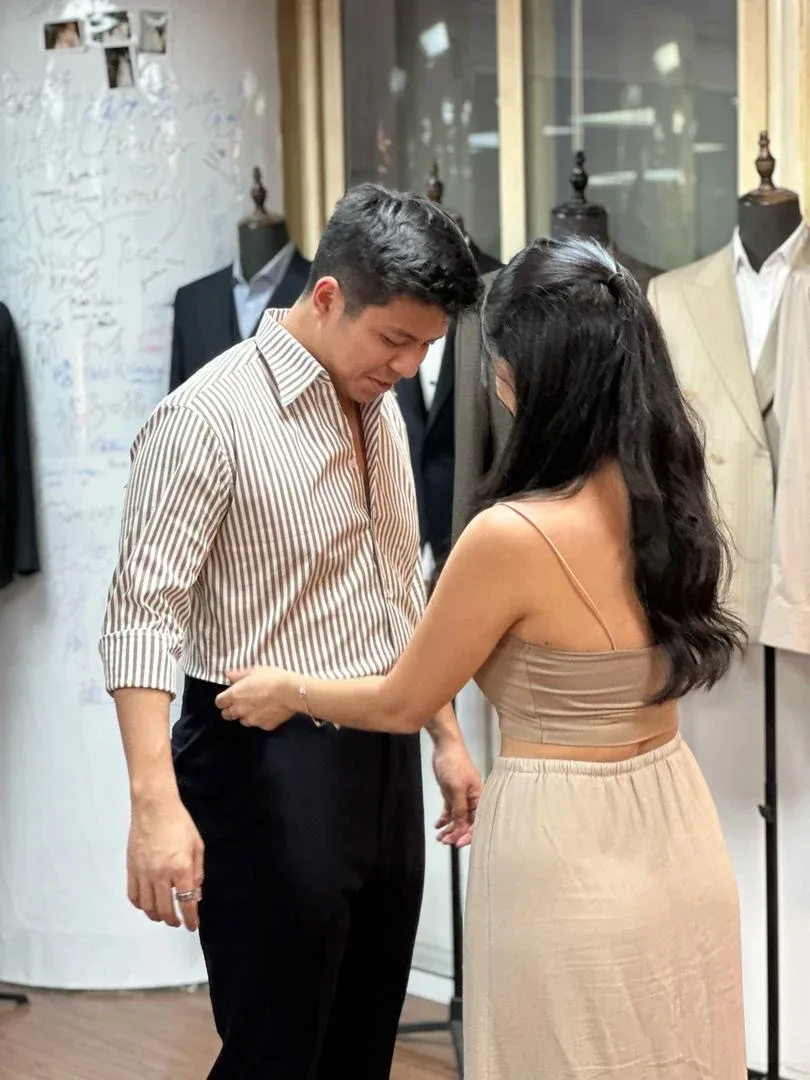
At the fitting, button the shirt as intended, sit, reach forward and try it with your jacket where practical. Discuss pressure at the neck, pulling across the back and how the sleeves feel. Check the hem for your intended tucked or untucked use. Ask the maker to assess changes instead of judging only a standing mirror pose.
Keep a repeat-order record
Save fabric reference, collar and cuff choices, quantity, agreed price and any adjustments. Kelly keeps measurements for reorders from abroad, but tell us when your measurements or fit preferences have changed. Reconfirm fabric availability rather than assuming the same cloth remains in stock. For several shirts, specify each combination separately so a single reference does not accidentally apply to the entire order.