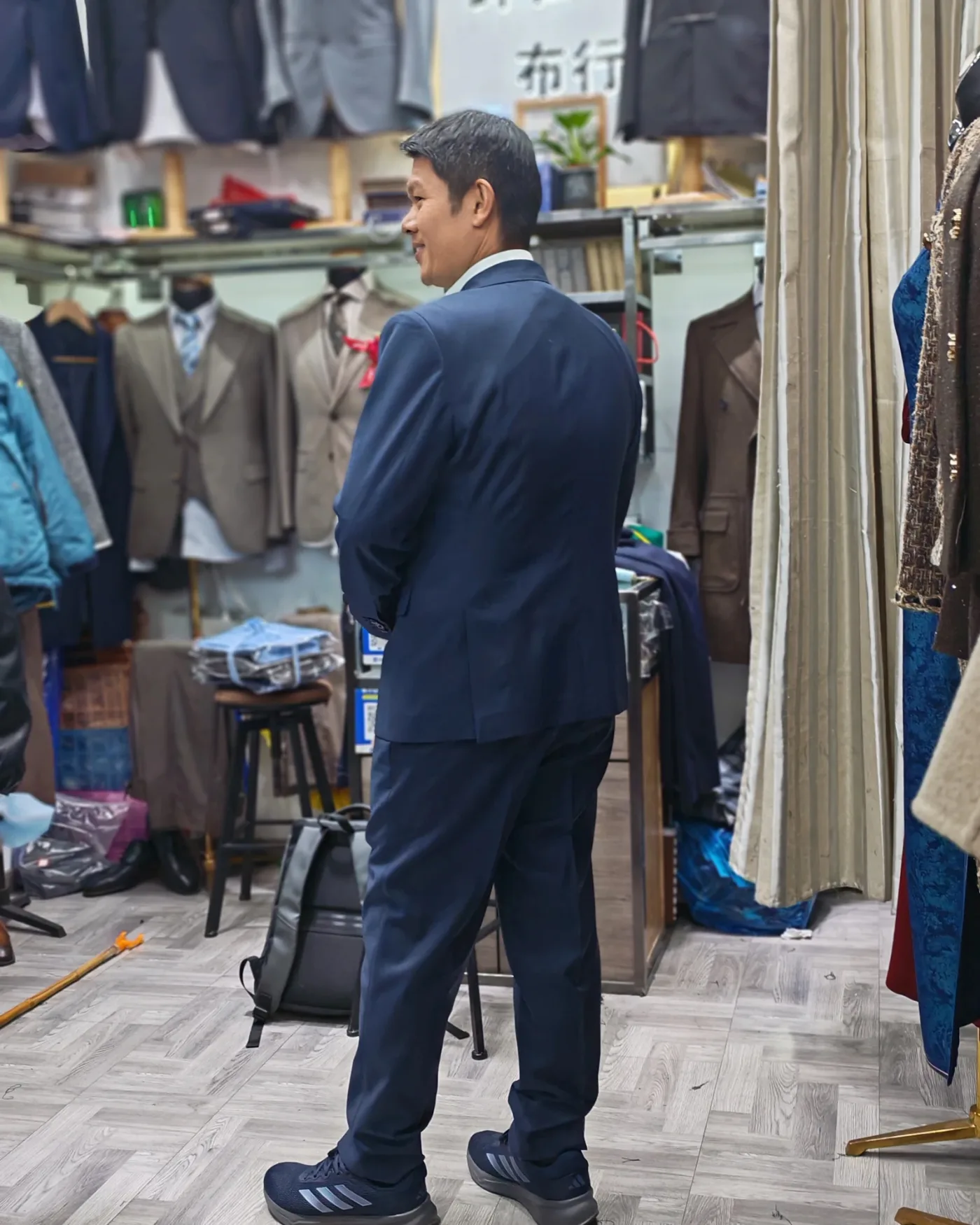
When a garment does not feel right, begin with the problem rather than a guessed repair. “It pulls when I sit” gives a tailor different information from “take it in.” Kelly assesses alterations to clothes bought elsewhere; bring the garment or send photos and describe the changes you want for a quote.
Describe the issue in use
Say where the garment feels loose, tight or awkward and when it happens. Distinguish a comfort problem from a style preference. List changes in order of importance so the assessment can start with what matters most. Explain whether you still like the garment overall or are trying to achieve a substantially different shape.
Bring the complete context
Wear or bring the shoes and layers that affect the alteration. For trousers, that may include the intended shoes and belt; for a jacket, the shirt beneath it. Tell the tailor about previous alterations or damage you know about. Do not remove material or open seams yourself before the assessment.
Ask what is feasible first
Ask the maker to inspect the garment and explain which changes are possible, which have limitations and whether one change affects another area. Photos can start a conversation but cannot show every internal seam or material condition. Do not assume there is spare fabric to enlarge a garment, or that a major redesign is a simple adjustment.
Agree scope and price before work
Write down the exact alterations, quote, fitting arrangement and collection date. Separate essential work from optional changes so you can approve them consciously. The site’s starting prices for new garments are not alteration prices. Ask how a revised scope will be confirmed if the maker discovers another issue during assessment or work.
Recheck the original problem at collection
Repeat the movement that caused the issue, wearing the relevant layers. Confirm each agreed alteration and discuss any remaining concern before leaving. Keep the assessment note and receipt. If your deadline is an event or departure, tell Kelly before work is agreed, rather than expecting the ordinary new-order turnaround to apply. An alteration quote should describe the actual garment and work, not rely on a generic promise.