A saved dress photo is a useful starting point, but it rarely explains the whole order. Perhaps you like the neckline and dislike the skirt, or want the same outline with sleeves. A short written brief lets you separate those choices before the tailor quotes or cuts the fabric.
At Kelly’s Tailor Shop, custom dresses start at ¥800 in CNY; the final price depends on design, fabric and quantity. Our dress services and current FAQ cover occasion and everyday dresses. Use the worksheet below to prepare a particular design, then discuss what is achievable with your chosen fabric.
Start with what the dress has to do
Write one sentence about its use: a seated dinner, an office day with a jacket, or a celebration involving walking and dancing. Add the event date, your Shanghai arrival and departure dates, and when you can attend fittings. An event deadline and a flight deadline are different constraints.
Choose your three priorities. These might be covered shoulders, comfortable sitting and a reusable daytime style. Mark the remaining details as flexible. This gives the tailor a useful way to propose changes when the exact fabric or construction in a reference is unsuitable.
Label each reference: keep, change, clarify
Bring a small set of front, side and back views if available. Beside each photo, record keep, change and clarify. For example: keep the waist position; change the sleeve length; clarify how the back fastens. If two photos conflict, identify which one controls each detail.

In this existing shop photo, the jacket covers much of the dress bodice. It is useful for discussing the overall pairing, but a separate view would be needed to explain the neckline, shoulder and armhole. Use photographs for the details they actually reveal.
Complete a six-part design sheet
Copy these prompts into a message and fill the gaps before the consultation:
- Shape and waist: fitted or relaxed; where the waist should sit; where you want room rather than a close fit.
- Neckline and back: preferred shape and coverage; details that must work with your intended underwear.
- Sleeves and shoulders: length, coverage and the movements you need, including reaching forward.
- Skirt and hem: intended length with the chosen shoes; walking room; pockets or a slit if wanted.
- Fastening: proposed position and whether you need to dress without help.
- Fabric and lining: sample reference, composition, color, lining coverage and any areas where transparency is a concern.
Ask which choices affect the quote. Pockets, lining and a matching jacket should be listed explicitly if ordered. Keep a copy of the agreed sheet rather than relying on a photograph alone.
Choose the fabric and lining together
Compare the actual sample with the intended shape. Ask the tailor to show how it falls and whether the proposed lining changes that result. If opacity matters, discuss the outer fabric and lining as a combination, including the skirt and bodice separately. Ask about care before approving the material.
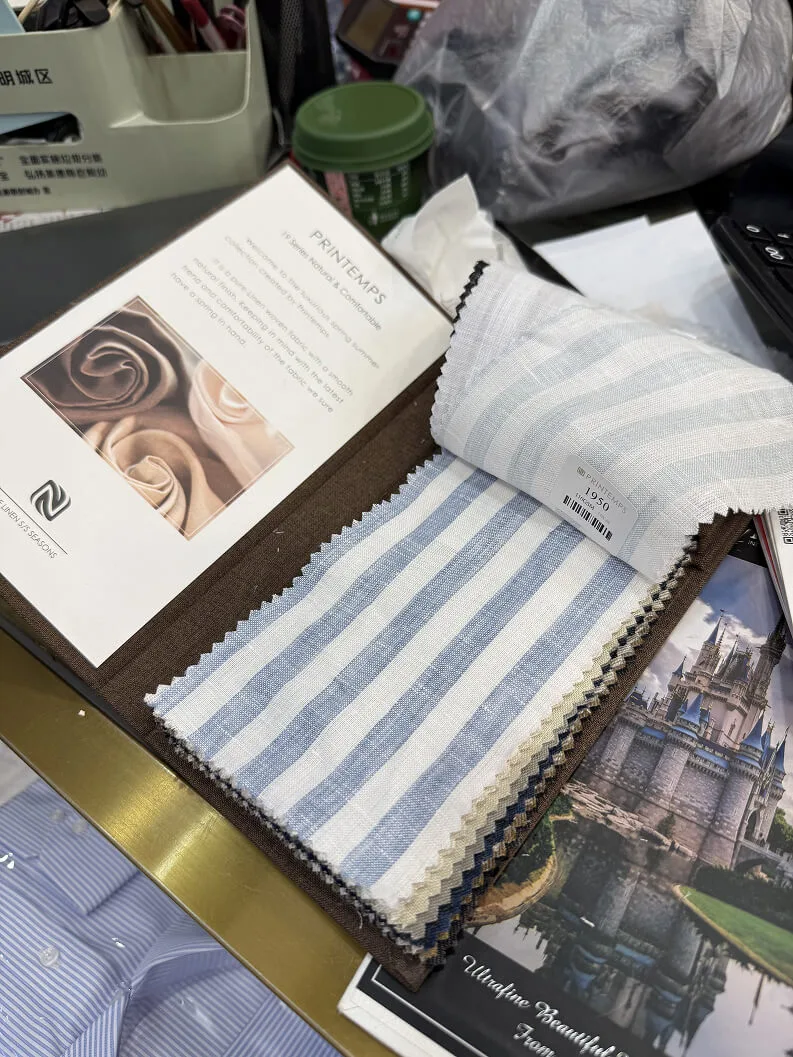
A sample reference helps identify the selection later. This photograph illustrates recording a fabric choice; ask to see suitable current dress fabrics rather than treating a photo as a stock list. Confirm composition and color from the actual sample, not from the image.
Bring the layers and test ordinary movement
Wear or bring the underwear, shoes and any jacket you intend to use. Tell the tailor if these are provisional: a hem checked in one pair of shoes may need reviewing with another. For a layered outfit, check both the dress by itself and the dress with its jacket.
During the fitting, sit, walk, turn and reach gently. Report where the garment pulls, shifts or exposes more than you want. Check pocket access and fastening as well as the standing outline. Agree the adjustments and next appointment before leaving; ask for the schedule for this design rather than assuming the minimum suit timing applies to a dress.
Approve the order in one final message
Use this illustrative message as a structure, replacing the details with your own:
I’d like a dress for a seated evening event. My priorities are shoulder coverage, comfortable sitting and a hem that works with the shoes I will bring. Photo A shows the waist and skirt I like; I want longer sleeves and need advice on the back closure. Please confirm the fabric sample, lining, included details, total quote and fitting dates before we proceed.
Before cutting, resolve any open design questions and confirm the agreed specification with the tailor. At collection, compare the finished garment with that record and check the fit again. For broader preparation, see our first-visit checklist; for a qipao, use the separate qipao design and fitting guide.